A newly published scientific study has documented the first recorded presence of the man-of-war fish, Nomeus gronovii, in Lebanese waters and across the Mediterranean Sea, marking a significant milestone in marine biodiversity research in the region.
The study, titled “First Record of the Man-of-War Fish Nomeus gronovii (Gmelin, 1789) from Lebanese Waters (eastern Levantine Mediterranean Sea)”, was authored by Samer Fatfat, Ali Badreddine, Jalal Halwani, and Ricardo Aguilar, representing leading academic and conservation institutions in Lebanon and internationally.
The research is a collaborative effort between the Palm Islands Nature Reserve in northern Lebanon, the Tyre Coast Nature Reserve in the south, Lebanese Canadian University, and the international marine conservation organization OCEANA based in Spain.
Scientific Breakthrough
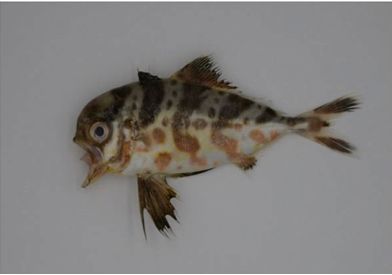
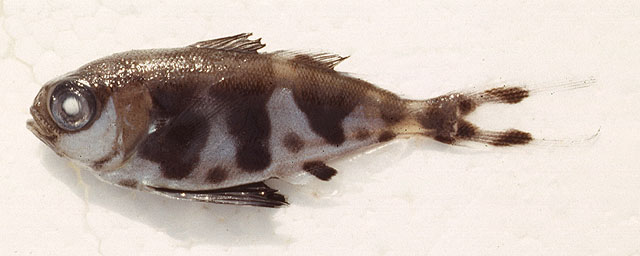
On 15 February 2026, a single specimen was captured by a local fisherman (©Annous, M.) using a trammel net at a depth of approximately 23 m near Ramkin Island (34°28′50.98″N, 35°46′19.19″E), Palm Islands Nature Reserve (Tripoli, north Lebanon). Photographs and videos of the specimen were provided to one of the authors (SF) as part of an ongoing citizen science initiative. In 2022, two Marine Protected Areas (MPAs) in Lebanon-Tyre Coast Nature Reserve (TCNR) in the south and Palm Islands Nature Reserve (PINR) in the north-launched a collaborative marine biodiversity monitoring program involving fishers, divers, and marine stakeholders. This initiative aims to anticipate the arrival of Non-Indigenous Species (NIS), monitor established populations, and document ecologically significant taxa [5]. Subsequently, the specimen was retrieved from the fisherman by one of us (SF) for detailed examination, and preservation. Identification was confirmed through the analysis of photographic material and direct inspection of the specimen, based on standard ichthyological diagnostic criteria, and morphological characteristics.
The specimen was preserved in 70% ethanol and deposited under the code PINR12 for future reference and genetic analyses. Morphometric and meristic measurements were obtained directly from the specimen and supplemented by calibrated measurements derived from photographic analysis.
Implications for Lebanon and the Mediterranean
This discovery highlights the increasing occurrence of non-indigenous and range-expanding marine species in the eastern Mediterranean, a phenomenon linked to environmental changes, maritime activity, and connectivity with other seas.
While the current record is limited to a single juvenile specimen, scientists stress the importance of continued monitoring to assess potential ecological impacts, particularly regarding competition with native species and changes in marine food webs.
The Role of Citizen Science
The detection of this species underscores the critical role of local fishermen and citizen science initiatives in supporting marine biodiversity monitoring. Collaborative programs led by Lebanon’s marine protected areas have proven essential in identifying new or rare species and strengthening early detection mechanisms.
Conclusion
The first record of Nomeus gronovii in Lebanese waters is a landmark scientific observation, reinforcing Lebanon’s role as a key monitoring point for marine biodiversity in the Mediterranean. It also calls for enhanced research, regional cooperation, and sustainable marine management to better understand and respond to ongoing ecological shifts.


 Your request has been submitted successfully.

 Own or work here?